
10 Common Mistakes to Avoid When Disposing of Medical Waste
Medical waste disposal is more than a routine task, it’s a critical responsibility for healthcare facilities, clinics, and labs. Improper handling can lead to serious health risks, environmental hazards, and costly regulatory fines. By understanding the most common mistakes in medical waste disposal, your facility can stay compliant, protect staff and patients, and maintain a safe environment.
1. Mixing Medical Waste with Regular Trash
One of the biggest mistakes is tossing medical waste into everyday garbage bins. Not only does this pose risks to custodial staff and waste handlers, but it also violates strict federal and state regulations. Always separate biohazardous waste from municipal solid waste.
2. Multitasking While Handling Waste
Disposing of medical waste while distracted can lead to accidents such as spills, improper segregation, or even sharps injuries. Staff should treat waste disposal as a focused task to minimize risks and ensure compliance.
3. Allowing Liquids to Leak from Containers
Leaking fluids are dangerous and may cause contamination or exposure. All liquid waste must be stored in leak-proof containers with secure lids to prevent spills during handling and transportation.
4. Treating Sharps Like Other Medical Waste
Sharps, including needles, scalpels, and syringes, require their own designated sharps containers. Throwing sharps into red bags or other waste containers increases the likelihood of puncture injuries and infections.
5. Opening Sealed Medical Waste Containers
Once a medical waste container is sealed, it should never be reopened. Reopening containers risks exposure to pathogens and violates safety protocols. Always ensure waste is properly packaged the first time.
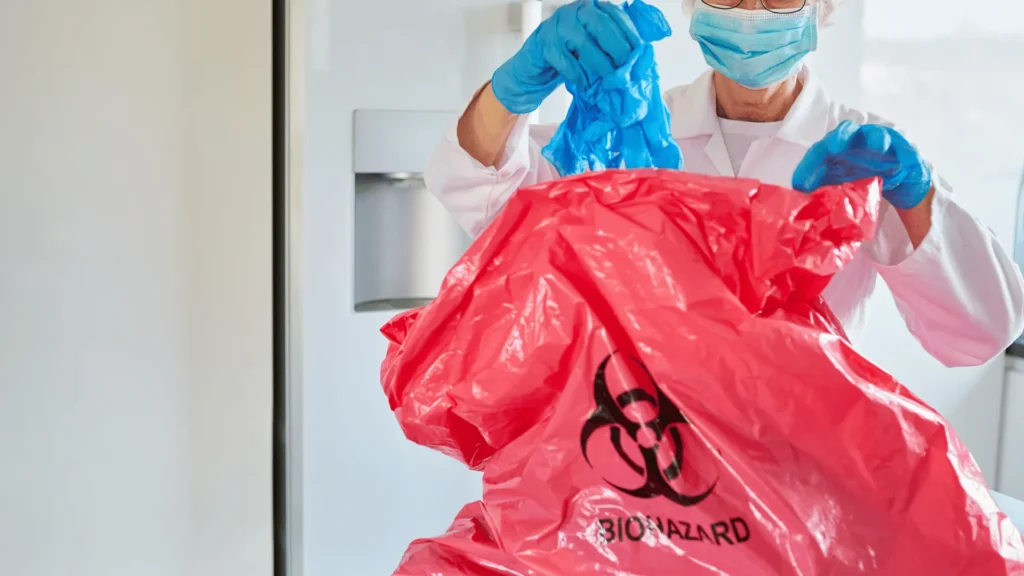
6. Handling Waste with Bare Hands
Personal protective equipment (PPE) such as gloves, gowns, and masks is essential when handling regulated medical waste. Barehanded handling increases the risk of cuts, punctures, or direct exposure to infectious materials.
7. Storing Containers in Unrefrigerated Rooms
Some medical waste, particularly pathological waste, must be stored in refrigerated conditions to prevent decomposition and odor. Storing containers in non-temperature-controlled areas can result in regulatory violations and unsafe conditions.
8. Transporting Waste in Unmodified Vehicles
Medical waste must be transported in licensed, properly modified vehicles designed for biohazardous material. Using standard vehicles is unsafe, non-compliant, and increases the risk of contamination.
9. Allowing Untrained Staff to Manage Medical Waste
Every employee handling medical waste should be trained in OSHA and state regulations. Allowing untrained staff to dispose of waste increases the chances of mistakes, accidents, and regulatory fines.
10. Neglecting Proper Documentation and Tracking
Medical waste disposal requires accurate manifests and tracking from the point of generation to final disposal. Failing to maintain these records can result in fines, audits, or liability in case of mishandling.
Partner With A Trusted Regulated Medical Waste Company
Avoiding these common mistakes is essential for maintaining compliance, protecting staff and patients, and minimizing environmental impact. However, managing every detail on your own can be overwhelming. That’s where EcoMed makes a difference. As a trusted medical waste disposal partner, EcoMed provides compliant, reliable, and cost-effective solutions tailored to your facility’s needs. With professional training, proper containers, and full regulatory support, EcoMed helps you avoid costly errors and ensures your medical waste is handled safely, giving you peace of mind and letting you focus on patient care. Reach out to EcoMed for more information on how you can stay compliant with federal and state regulations and reduce costly mistakes.